

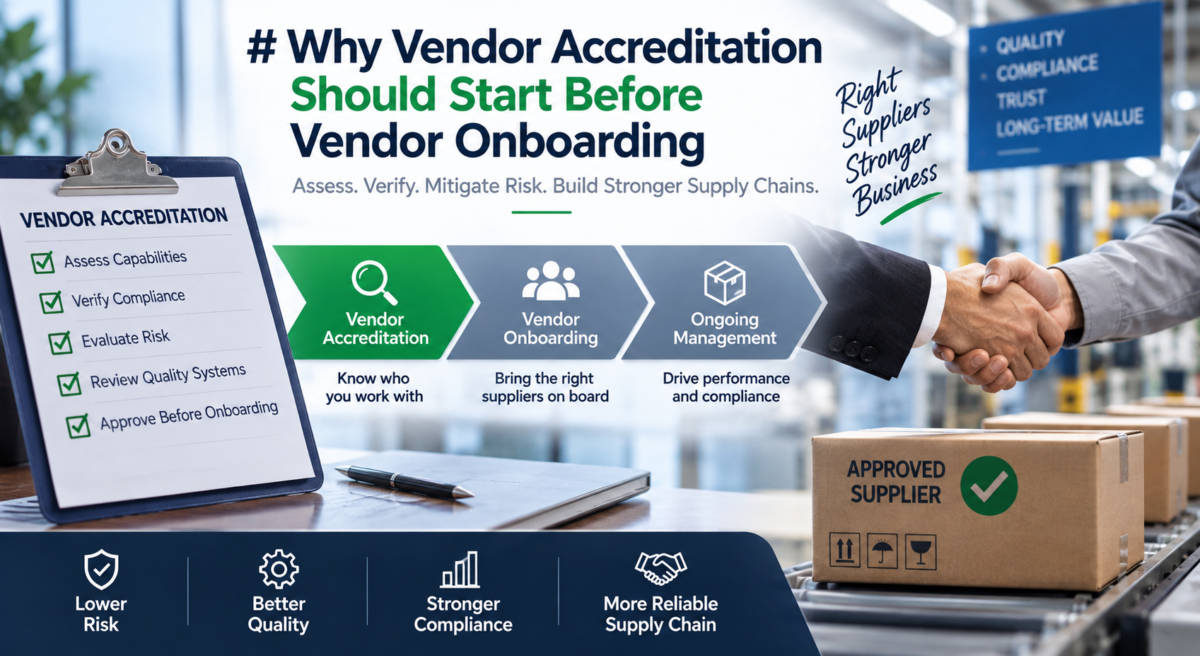
Procurement teams often find out about vendor data issues too late.
A supplier might already be added to the system before the buyer realizes there are missing compliance details, incomplete contact information, unclear business credentials, or gaps in approval responsibilities. By that time, the vendor’s record has already entered the procurement workflow, and making changes becomes more difficult.
That’s why vendor accreditation before onboarding is important.
Vendor onboarding is when a supplier becomes active in the procurement system. But vendor accreditation should happen before that. It is the first step that helps procurement teams decide if a vendor is ready to move forward.
For companies that manage many suppliers, locations, departments, and approval rules, this distinction is important. If every supplier is moved directly into onboarding, unverified vendors can enter the system with incomplete or incorrect information.
A structured accreditation process helps procurement teams gather essential vendor details, review compliance information, and reduce risk before the vendor becomes part of active procurement workflows.
What Is Vendor Accreditation Before Onboarding?
Vendor accreditation before onboarding is the process of collecting and reviewing key vendor information before allowing the vendor to start the formal onboarding process.
It usually includes basic vendor details, contact information, compliance inputs, business information, and initial verification steps. The goal is to check if a vendor is suitable to move forward.
In simple terms:
Vendor accreditation checks if a vendor should be considered. Vendor onboarding prepares an approved vendor to start working with the business.
This difference matters because onboarding is not just about collecting data. It often involves creating a vendor master record, setting up purchase workflows, managing documents, handling approvals, integrating with ERP/SAP systems, and enabling active supplier collaboration.
If accreditation is skipped, procurement teams may waste time onboarding vendors that are incomplete, unsuitable, or not ready for approval.
Vendor Accreditation vs Vendor Onboarding
Vendor accreditation and vendor onboarding are connected, but they are not the same process.
| Vendor Accreditation | Vendor Onboarding |
| Happens before onboarding | Happens after initial vendor verification |
| Captures basic vendor and compliance details | Collects complete onboarding documents and workflow inputs |
| Helps decide whether the vendor should move forward | Helps activate the vendor for procurement use |
| Reduces early supplier risk | Prepares the vendor for transactions and collaboration |
| Acts as a pre-approval filter | Acts as a structured activation process |
| Useful for screening new suppliers | Useful for setting up approved suppliers |
A simple example makes this clear.
If a supplier only provides a name and email, that is not enough for onboarding. Procurement may first need to check if the supplier is relevant, if the business details are valid, if compliance information is available, and if the vendor fits the company’s requirements.
That first verification step is accreditation.
Once the supplier passes that stage, onboarding can collect more detailed information, such as tax details, bank details, documents, category mapping, approval routing, ERP sync requirements, and portal access.
Common Challenges When Accreditation Is Mixed With Onboarding
Many companies treat vendor accreditation and onboarding as one process. This causes unnecessary problems.
1. Unverified Vendors Enter the System Too Early
When every vendor request goes straight into onboarding, procurement teams may end up with incomplete or unsuitable supplier records.
This creates clutter in the vendor database and makes it harder to know which vendors are genuinely ready for approval.
2. Vendor Data Becomes Inconsistent
If there is no separate accreditation step, different teams may collect vendor information in different formats.
One buyer may collect only a name and phone number. Another may collect email, GST, compliance details, and business category. A third may forward vendor details through email without any standard structure.
Over time, this leads to inconsistent vendor data.
3. Compliance Checks Happen Too Late
Supplier risk assessment should not begin after the vendor is already inside the system.
If compliance information is checked late, teams may spend time onboarding a vendor that later fails a basic review. This slows down procurement and creates unnecessary rework.
4. Approval Ownership Becomes Unclear
Without a structured vendor approval workflow, it may not be clear who should review the vendor first.
Procurement, finance, compliance, legal, operations, and IT may all need different information. If the process is not defined early, approvals can get delayed or missed.
5. Vendors Often Have a Bad First Experience
Vendors also feel the effects of a weak process.
If they are asked for the same information over and over or receive unclear instructions, the relationship starts with confusion. A good submission experience for vendors can help avoid back-and-forth communication from the start.
Why Traditional Vendor Registration Methods Don’t Work
Traditional vendor registration often uses emails, spreadsheets, shared folders, and manual follow-ups.
These methods work fine when there are only a few suppliers. But they get harder to manage when procurement teams are handling multiple vendor types, compliance rules, business areas, plants, and approval steps.
Manual Vendor Registration vs Structured Vendor Accreditation
| Manual Vendor Registration | Structured Vendor Accreditation |
| Vendor details are collected through emails. | Vendor details are gathered in a set format. |
| Teams use different templates. | The same required fields are used for every vendor. |
| Compliance information might be checked too late. | Compliance information is gathered before onboarding. |
| Vendor data is scattered in inboxes. | Vendor information is in one controlled process. |
| Approval status is unclear. | Each vendor request has a clear review status. |
| Vendors may be asked for the same information multiple times. | Vendors get a more organized submission experience. |
| Unverified vendors might be allowed to start onboarding. | Only verified vendors move forward. |
The main problem with manual registration is not just delay. It is poor control.
Procurement teams might not know if a vendor has submitted the required information, who reviewed it, if compliance details are complete, or whether the vendor should be onboarded.
This creates risk before any procurement activity even happens.
How Modern Vendor Accreditation Fixes These Issues
Modern vendor accreditation gives procurement teams a controlled process before onboarding starts.
The goal is not to add another approval step just for the sake of it. The goal is to ensure only suitable and verified vendors move forward.
1. Gathering Important Vendor Details Early
A structured accreditation module helps collect key information like vendor name, email, business details, and compliance inputs before onboarding.
This stops incomplete vendor requests from entering the active supplier process.
2. Separating Accreditation From Onboarding
This is the most important part.
Accreditation should confirm if a vendor is ready to proceed. Onboarding should complete the setup of a vendor that has already passed the first check.
When these two stages are separate, procurement teams can reduce unnecessary work and avoid putting unverified vendors into the system.
3. Improving Supplier Risk Assessment
Supplier risk often starts with missing or wrong information.
If basic vendor information is incomplete, compliance checks become harder. A pre-onboarding accreditation process gives teams a chance to find missing details, mismatched information, or vendors that need more review.
4. Creating a Vendor-Friendly Submission Experience
Vendors should not have to guess what information they need.
A structured submission process gives vendors a clear way to provide the required details. This reduces repeated follow-ups and improves the first interaction between the supplier and the buying company.
5. Supporting a Clear Vendor Approval Workflow
A controlled accreditation process gives procurement teams better visibility into a vendor’s status.
Teams can see if a vendor is new, under review, waiting for information, approved for onboarding, or not suitable to proceed.
This helps procurement avoid unclear email-based approval trails.
How Vendora Helps With New Vendor Accreditation
Vendora’s New Vendor Accreditation module lets procurement teams collect essential vendor details before onboarding starts.
The module helps users gather vendor name, email, compliance information, and other required inputs as part of a separate but connected process.
This is important because accreditation should be a separate step from onboarding.
With Vendora, procurement teams can use accreditation as the first step in the vendor lifecycle. Only vendors that pass the initial check move forward into onboarding and other procurement processes.
For procurement teams, this leads to three practical benefits:
- Better control over who enters the vendor system
- More accurate vendor data from the start
- Less risk from incomplete or unverified supplier records
The value is not just in collecting information. It is in creating a cleaner start for vendor management.
Practical Example: Why Accreditation Should Come First
Imagine a manufacturing company that gets vendor requests from different departments.
One department suggests a packaging supplier. Another recommends a logistics provider. A third recommends a maintenance contractor. Each request arrives with different information.
Some vendors only have a name and a phone number. Others include an email, compliance proof, and business type. Some are good matches for what the company currently needs. Others are only exploratory or not fully filled out.
If all these vendors go straight to onboarding, the procurement team has to do a lot of cleanup later.
A better way is to check if they are fit first. The team can ask these questions:
- Is the vendor needed for a real business need?
- Have they provided basic contact details?
- Is their email valid for communication?
- Have they provided the necessary compliance papers?
- Is their business type clear?
- Should they move to onboarding?
- Who should check or approve this?
This early check stops bad data from creating bigger problems later.
Best Practices for Vendor Accreditation Before Onboarding
1. Know the Purpose of Accreditation
Do not use accreditation like an onboarding form.
Accreditation should decide if the vendor is ready to move forward. Onboarding comes after and handles the details.
2. Keep the First Step Simple
Only ask for what you need for initial verification.
This might include the vendor’s name, email, business type, what they offer, compliance details, and why they are being considered.
Do not ask for all onboarding information at once.
3. Use Standard Fields
Each vendor request should include the same key information.
This helps with data quality and makes it easier to compare new vendors.
4. Get Compliance Information Early
Compliance should not be left until the end.
Include basic compliance details at the beginning so risk can be spotted before onboarding.
5. Set Who Reviews the Request
Make it clear who checks accreditation.
This might be the procurement team, compliance, finance, legal, plant, or category owner, depending on the company.
6. Link Accreditation to Onboarding
Accreditation should not be a disconnected step.
Once a vendor is approved, their information should go directly into onboarding so no work is repeated.
7. Track Rejected or Pending Vendors
Not all vendors move forward right away.
Some may need more information, may not fit, or might be useful later. Keeping track keeps the context clear.
Common Mistakes to Avoid
Treating Accreditation and Onboarding as the Same
This causes confusion and weakens control.
Accreditation filters. Onboarding activates.
Asking for Too Much Too Soon
If the form is too long, vendors might not submit it or may provide incomplete answers.
Keep the first step focused.
Allowing Email-Based Approvals
Approving vendors through email outside the process causes data gaps.
The process should guide people back to the same accreditation flow.
Checking Compliance Too Late
Waiting to check compliance leads to rework.
Early risk checks help prevent unqualified vendors from entering the system.
Not Linking Accreditation to Reporting
Procurement leaders need to know how many vendors are pending, approved, or rejected.
This helps manage the process smoothly.
![A modern smartphone showing the [Vendor Portal Management System] dashboard for on-the-go vendor collaboration.](https://www.vendorascmsoftware.com/wp-content/themes/vendora/images/phone.webp)
