

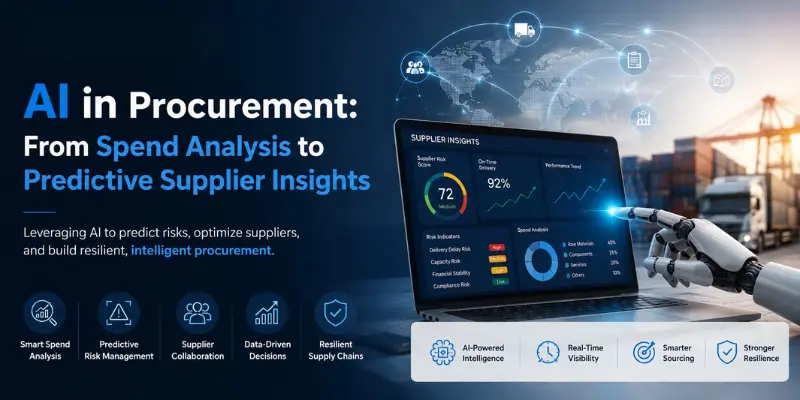
Introduction
Procurement is rapidly evolving from a transactional function into a strategic driver of business resilience and operational agility. As global supply chains become more volatile, enterprises can no longer rely solely on historical spend analysis to guide procurement decisions.Artificial intelligence (AI) is reshaping procurement by enabling organizations to predict supplier risks, improve sourcing decisions, and gain real-time visibility across supplier ecosystems. For manufacturing enterprises managing hundreds of suppliers, AI is becoming essential to building more intelligent and resilient procurement operations.Why Traditional Spend Analysis Is No Longer Enough
For years, spend analysis helped procurement teams identify cost-saving opportunities, monitor supplier spending, and improve sourcing efficiency. While valuable, traditional procurement analytics remain largely reactive.Historical data alone cannot predict:- Supplier delivery disruptions
- Capacity shortages
- Vendor performance decline
- Logistics instability
- Compliance and operational risks
The Shift Toward Predictive Procurement
AI enables procurement teams to move beyond static dashboards and generate predictive insights using:- Supplier performance history
- Delivery schedules
- Invoice and ASN data
- Supplier responsiveness
- External market and risk indicators
How AI Is Transforming Supplier Intelligence
AI-driven procurement platforms are increasingly becoming decision intelligence systems rather than simple workflow tools.Predictive Supplier Risk Management
Intelligent Procurement Analytics
Automated Exception Detection
- Duplicate invoices
- Pricing inconsistencies
- Delayed deliveries
- Unusual purchasing behavior
Improved Demand and Supply Coordination
Why Supplier Collaboration Is Critical for AI Success
AI effectiveness depends heavily on access to accurate, real-time supplier data. Many enterprises still operate with fragmented procurement workflows driven by spreadsheets, emails, and disconnected systems.Without centralized supplier collaboration, AI insights remain limited.Building Connected Supplier Ecosystems
Digital supplier collaboration platforms help organizations centralize:- Vendor onboarding
- Purchase order communication
- Delivery scheduling
- Advance Shipping Notices (ASN)
- Invoice tracking
- Supplier performance monitoring
ERP Integration Matters
For enterprises using ERP systems such as SAP, procurement transformation requires seamless integration between supplier collaboration platforms and core enterprise systems.Integrated procurement ecosystems improve:- Data consistency
- Supplier transparency
- Workflow efficiency
- Cross-functional decision-making
AI and the Future of Procurement Leadership
AI is not replacing procurement leaders — it is elevating their role. Procurement teams are increasingly expected to drive resilience, supplier innovation, and strategic decision-making across the enterprise.Future procurement organizations will rely on AI for:- Predictive sourcing recommendations
- Real-time supplier intelligence
- Autonomous workflow optimization
- Continuous supplier risk monitoring
Conclusion:
AI is transforming procurement from a cost-management function into a predictive intelligence capability. Enterprises that move beyond traditional spend analysis and embrace AI-driven supplier insights will be better positioned to improve resilience, reduce operational risk, and strengthen supplier ecosystems. For manufacturing and industrial enterprises managing complex vendor networks, the future of procurement will depend on intelligent supplier collaboration, connected data environments, and predictive decision-making powered by AI.FAQs;
Content ownership: Vendora SCM Software Editorial Team
Subject-matter review: Procurement, Vendor Management & ERP Implementation Team
Last reviewed: 04 July 2026
Learn more about Vendora’s company background and implementation experience on the About Us page.
![A modern smartphone showing the [Vendor Portal Management System] dashboard for on-the-go vendor collaboration.](https://www.vendorascmsoftware.com/wp-content/themes/vendora/images/phone.webp)
